
On July 16th, 2025, the Mayor of Mexico City, Clara Brugada, announced Decree No. 1, entitled “For a Livable and Affordable City with Local Identity and Roots” (the “Ordinance”) which was published on the same day in the Official Gazette of Mexico City.
The Ordinance sets forth fourteen comprehensive actions to address gentrification in areas of increasing property appreciation or high economic pressure in Mexico City. Among other measures, the Ordinance proposes enacting a new law to regulate rental prices, the creation of a Master Plan focused on the most affected neighborhoods, and the establishment of a Tenant Ombudsman to protect tenants, as well as measures to combat real estate speculation in critical areas.
Key Measures
The following are the key actions set forth in the Ordinance:
1. Rent Increase Control. Residential rents will be stabilized by prohibiting annual increases exceeding the National Consumer Price Index published by the National Institute of Statistics and Geography for the preceding year. The necessary legal instruments will be created to ensure compliance.[1]
2. Price Index and Real Estate Pressure Zones. A “Reasonable Rental Price Index” will be implemented to identify areas under the highest urban pressure.
These areas will be designated under the Master Plan as “Real Estate Pressure Zones” (“ZTI”), which will include traditional neighborhoods in the boroughs of Cuauhtémoc (i.e., Hipódromo Condesa, Condesa, Juárez, Roma Norte, Roma Sur, Doctores, Buenos Aires) and Miguel Hidalgo (i.e., Escandón I-II, San Miguel Chapultepec I-II).
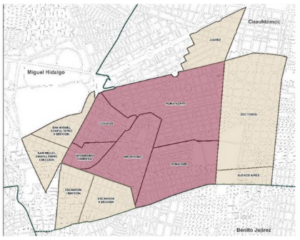
The Government of Mexico City will undertake special action in these zones: it will curb real estate speculation, promote the construction of affordable housing, restrict projects that cause displacement, and, through the Master Plan, establish participatory urban development guidelines to ensure the permanence of the original population.
3. Regulation of Short-Term Rentals. The regulation of short-stay temporary housing, including digital platforms such as Airbnb, will be strengthened to preserve the availability of affordable housing and prevent price distortions. [2] It is anticipated that secondary regulations will include registration requirements, operational limits, and tax obligations for short-stay landlords.
4. Tenant Rights Ombudsman. A Tenant Rights Ombudsman will be established as a public entity providing legal advice, mediation, and representation to tenants, with authority to sanction abuses such as unlawful rent increases, arbitrary evictions, or abusive lease clauses. This body will aim to balance the relationship between landlords and tenants and safeguard the right to adequate housing.
In this regard, it will be necessary to wait for the approved legal text to determine its degree of compatibility with current civil and procedural legislation. It should be noted that the latter is a federal matter, since only the Federal Congress is competent to amend the National Code of Civil and Family Procedures, which regulates, among other things, disputes related to real estate leasing.
5. New Rental Law. A bill will be submitted to the Congress of Mexico City to enact the Law on Fair, Reasonable and Affordable Rents (the “Fair Rent Law”), aimed at regulating residential rental prices and balancing the obligations between landlords and tenants. This law will establish caps and reasonableness criteria for rental rates, providing a legal foundation for rent control measures.
In the same token as with the prior numeral, we will have to wait for the legal text to be approved to determine its degree of compatibility with the freedom of economic competition guaranteed under the Federal Constitution.
6. Public Housing and Social Leasing. The Plan will prioritize the construction of sustainable public housing in central areas with increasing property appreciation or high economic pressure, allocating resources to a Public Housing Leasing Program. This program will offer below-market rental rates to vulnerable groups (i.e., young people, single mothers, senior citizens, and essential workers) to prevent displacement. In parallel, procedures for the construction of social housing will be streamlined, and incentives will be granted for sustainable projects, encouraging private sector participation in affordable housing initiatives.
Regarding this action, it is expected that Planning Regulation Number 26, which seeks to incentivize the construction of social housing and has been suspended since 2013, will be reactivated (or updated and replicated).
7. Housing Improvement and Family Condominiums. The Housing Improvement Program will be expanded with a focus on “progressive new housing”, supporting the expansion of living spaces in popular neighborhoods (e.g., additional floors or annexes) and the development of family condominiums on shared lots.
8. Master Plan in ZTI. The urban Master Plan for the ZTI will serve as a collaborative planning instrument with local residents to define guidelines, land uses, and development criteria that preserve the identity and accessibility of neighborhoods such as Roma, Condesa, Juárez, and Escandón. Once approved by the Planning Institute and the Ministry of Metropolitan Planning and Territorial Development, its provisions will be binding for all new real estate developments.
9. Community Roots and Cultural Heritage. A Community Roots Program will be launched to protect communities at risk of displacement, preserving public spaces, markets, cultural centers, and the “neighborhood memory” through heritage declarations, financial support, or special land-use designations. Neighborhood participation will be encouraged through community committees to ensure inclusion and reduce inequalities.
10. Incentives for Local Businesses. To prevent “commercial gentrification”, a Special Incentives Program will be launched, offering soft loans, seed capital, and tax support for local micro, small, and medium-sized enterprises (MSMEs). Landlords of commercial premises within ZTI areas will be subject to regulations to prevent excessive rent increases, thereby protecting traditional businesses against large retail chains.
11. Land and Housing Observatory. A Land and Housing Observatory will be established to monitor sales and rental prices, lease agreements, housing supply, vacancy rates, and land use in Mexico City.
Legal and Regulatory Implications
The Ordinance will represent a significant shift in Mexico City’s real estate regulatory framework, combining immediate enforcement measures with medium-term legal reforms:
1. Strengthening of Existing Rental Rules. The limitation of rent increases to the inflation rate, already provided for in Article 2448-D of the Civil Code for the Federal District (now Mexico City), will now be subject to strict enforcement. The Mexico City Government will be required to issue regulations or guidelines to ensure compliance (e.g., mandatory registration of lease agreements and their annual adjustments).
This will entail greater intervention over private contracts, requiring landlords to adhere to official caps on any renewal or adjustment, under the risk of nullification of non-compliant clauses and the imposition of fines.
It will be crucial for the implementing regulations to respect constitutional principles of proportionality, as excessive caps or disproportionate restrictions could give rise to constitutional challenges (amparo proceedings).
2. Fair Rent Law. If enacted, the Fair Rent Law is expected to introduce rent caps linked to official indices, require the registration of lease agreements with a competent authority, and prohibit abusive clauses (e.g., disproportionate penalties or rent increases above inflation). Additionally, administrative and financial penalties would be imposed on noncompliant parties, along with oversight and mediation mechanisms administered by the Tenant Rights Ombudsman.
This law would entail increased government control over rental rates and potential restrictions on contractual freedom, which could result in legal challenges, including constitutional injunctions (amparo proceedings).
Notwithstanding, the proposed Fair Rent Law must be debated and approved by the Mexico City Congress before it can enter into force.
3. Amendments to Urban Planning Regulations. The implementation of the Master Plan in ZTI areas will require adjustments to urban development programs (General, Boroughs’, as well as Partial ones) and possibly to the Construction Regulations.
The Mexico City of Metropolitan Planning and Territorial Development (formerly, “SEDUVI”) may issue accords or promote decrees to define specific action areas with tailored rules, such as mandatory percentages of social housing, height and density limits, or penalties for projects not aligned with community retention objectives. These changes could impact the timelines and costs associated with obtaining construction permits. Developers will need to adapt their projects to comply with the new guidelines and avoid rejections or costly redesigns.
The duration and validity of land use zoning certificates already obtained, construction declaration records, or special construction licenses will need to be carefully reviewed to determine whether the application of the new regulations is retroactive and, if applicable, affects acquired rights.
It is recommended that local associations and industry chambers actively participate in public consultations and working groups related to the Master Plan and the Fair Rent Law in order to anticipate legal and commercial risks, as well as to propose adjustments beneficial to the sector. Likewise, it is essential to continuously monitor regulatory changes through direct communication with authorities and competent bodies, ensuring the timely incorporation of any new obligations into lease agreements.
4. Creation of New Administrative Bodies. The Tenant Rights Ombudsman and the Land and Housing Observatory will be newly established entities, whose structure, powers and procedures will be defined through local agreements or decrees. It is likely that the Ombudsman will be attached to the Social Attorney’s Office or the Legal Counsel’s Office, with authority to receive and process tenant complaints.
The Land and Housing Observatory will require amendments to the Mexico City Planning Law or the Housing Law to mandate that real estate companies, notary publics attesting real estate transactions, and landlords, the provision of data on transactions. Until these regulations are issued, there remains uncertainty regarding the scope of the new data reporting obligations.
[1] With respect to the prohibition on rent increases, this provision is already set forth in Article 2448 D of the Civil Code for the Federal District (now Mexico City), which establishes that residential rent may only be increased once per year and, where applicable, the increase may not exceed ten percent of the monthly rent amount agreed upon when the contract involves rents that do not exceed the limits provided by law. Please refer to our note dated September 20th, 2024.
[2] As a related matter, it is worth noting that in the past year certain secondary laws of Mexico City regarding tourism and housing were amended to regulate short-term stays offered through digital platforms such as Airbnb, aiming to balance the rights and obligations of these platforms with those applicable to traditional hotels. For further reference, please see our Client Alert: Amendments to Regulate Temporary Tourist Accommodation Service (AIRBNB).
Source | Presentation of the Master Plan: For a Livable and Affordable City with Local Identity and Roots – Cuauhtémoc and Miguel Hidalgo Boroughs, prepared by the Secretariat of Planning, Territorial Planning and Metropolitan Coordination of Mexico City, July 2025.