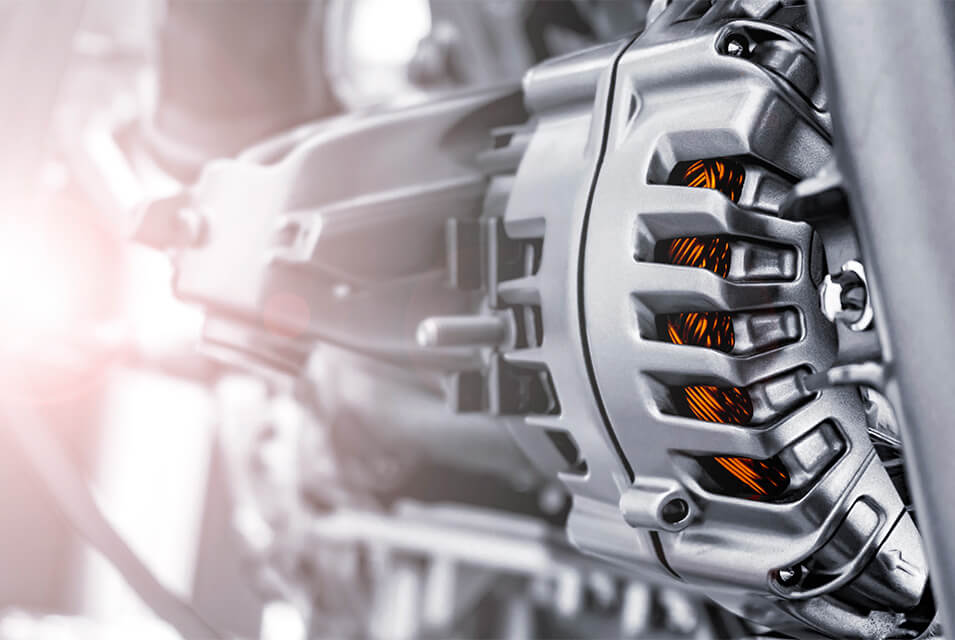
On June 2nd, 2025, the Official Mexican Standard NOM-014-ENER-2024 was published in the Official Gazette of the Federation (“DOF”), which establishes the minimum energy efficiency limits, testing methods, and marking requirements for singlephase, squirrel-cage, air-cooled alternating current electric motors with power ratings ranging from 0.180 kW to 2.238 kW (the “NOM-014”).
Background
New Draft NOM on Energy Efficiency for Electric Motors in Mexico.
Purpose
NOM-014 is aligned with the objectives of the Energy Transition Law and seeks to improve the energy efficiency of electric motors in Mexico by establishing minimum values, testing methods, and marking requirements to promote efficient energy use and reduce electrical consumption.
Scope
It applies to single-phase, alternating current, induction electric motors with squirrel-cage type, aircooled, whether open or closed, continuous operation, single rotation speed with power ratings ranging from 0.180 kW to 2.238 kW.
It is important to highlight that NOM-014 applies to all electric motors that are manufactured, imported, or marketed in Mexico, without being limited solely to importers that sell directly to end consumers. The standard sets forth mandatory compliance requirements for manufacturers, importers, distributors, and marketers involved in the commercialization of such products within the national territory.
However, electric motors that require auxiliary cooling equipment are excluded from the scope of this NOM14.
For greater clarity, the electric motors regulated by NOM-014 cover a wide range of common applications. These types of motors are typically used in pumps for liquid handling (such as irrigation systems, pressure systems in residential properties, and water well pumps), fans that allow air circulation (in industrial ventilation systems, exhaust fans, or air conditioning units), compressors that generate air or gas pressure (in air compressors for workshops, tire inflation systems, or small industrial equipment), as well as light-duty equipment used in workshops (such as drills, saws, and lathes).
They are also common in small industrial machines for manufacturing processes (such as conveyors, mixers, and presses), in agricultural machinery for automating tasks in the field (such as irrigation pumps and shredders), and in electric tools used for various manual activities (such as grinders, sanders, and portable drills). Moreover, the standard encompasses other similar equipment requiring motors with low to medium energy consumption, providing efficiency and reliability in a variety of operational environment.
Main Regulations and Requirement and Tariff Classification
The motors are classified into two types (I and II) based on their starting characteristics, and they must meet the minimum efficiency specified for each power rating and number of poles. Efficiency tests and evaluation methods are defined to ensure compliance with the standards.
These types of motors are classified under tariff code 8501.40.08.00, corresponding to the description: Single-phase alternating current (AC) electric motors.
This tariff code is designed to identify products that meet the technical specifications of single-phase electric motors, meaning that motors imported and manufactured in Mexico that fall under this tariff code must comply with the requirements of NOM-014.
Impacts on the Industry
1.- Manufacturers and Importers. They will be required to adjust their products to meet the new energy efficiency standards for electric motors before they can be marketed. Sanctions will apply to those who do not comply with the established specification.
Furthermore, imported electric motors that do not comply with the regulations will face greater entry barriers. This could create opportunities for domestic manufacturers, who, if able to meet the standards, could benefit from the advantage of already being in compliance with the regulations.
2.- Conformity Assessment Procedure (PEC). A system of testing, certification, and monitoring will be established to ensure that electric motors comply with the requirements of NOM-014. The certification will be valid for up to one year in accordance with modality 1 and three years, in accordance with modality 2.
Entry into Force and Replacement
The NOM-014 will enter into force in two stages:
- Stage 1: Becomes mandatory 180 calendar days after its publication in the DOF, i.e., starting in November 2025; and
- Stage 2: Becomes mandatory two years after the entry into force of Stage 1, i.e., in June 2027, with stricter efficiency parameters.
Both stages cover the same motors, but Stage 2 requires higher efficiency.
Additionally, this standard fully repeals and replaces NOM-014-ENER-2004, which will cease to be in effect once the new standard takes force.
To view the complete document, please click on the following link: NOM-14.
The authors thank the valuable support and guidance of its allies Javier Grandío Urrea and Javier Ortiz Malcher for the preparation of this note.